Gift Etiquette and Budgets: How Much to Spend and Other Unwritten Rules
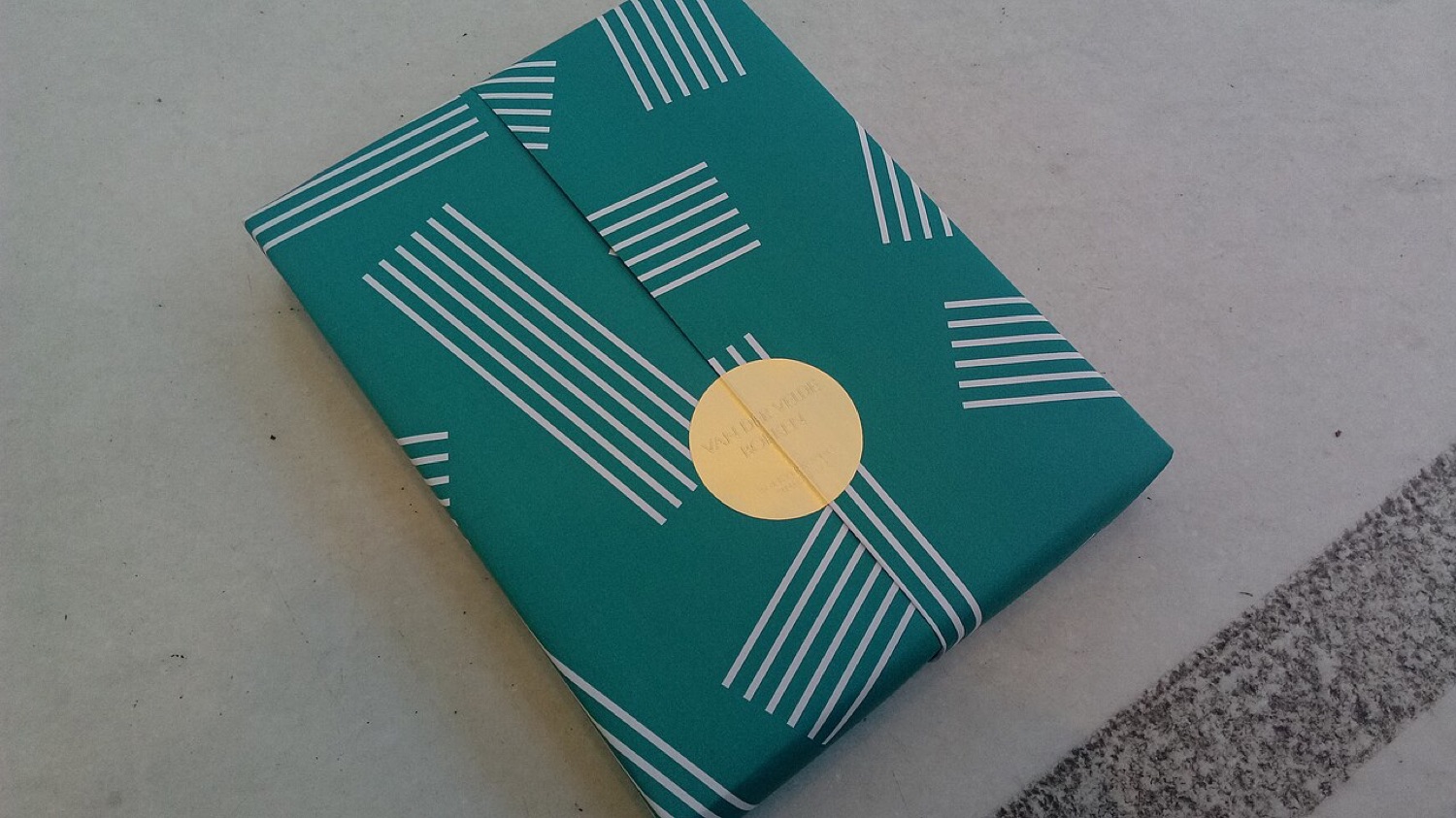
A gift wrapped in patterned paper and sealed with a sticker. Photo: Donald Trung Quoc Don, CC BY-SA 4.0, via Wikimedia Commons.
- Department: By Occasion
- Published: 21 January 2026
- Reading time: 4 minutes
British gift etiquette: how much to spend on wedding gifts and Secret Santa, cash and gift lists, office collections, thank-you notes, regifting and office sweepstakes.
Gift giving in Britain runs on a set of rules nobody writes down. How much is too much for a wedding? Is cash rude? Who organises the office collection? Here is our attempt to write the rules down, with the caveat that every family has its own.
How much to spend
| Occasion | Typical range | Notes |
|---|---|---|
| Wedding (guest) | Often £40 to £100+ | More for close family; many couples now have a gift list or honeymoon fund |
| Wedding (close family) | Varies widely | Parents and grandparents often give a larger joint gift |
| Christening or naming day | £20 to £50 | Godparents traditionally give a keepsake |
| Milestone birthday | £30 to £75, or a share of a group gift | Group gifts are common for 40th, 50th and 60th |
| Secret Santa | £10 to £20 | Stick to the limit |
| Teacher thank-you | £5 to £15, or a class collection | A heartfelt card matters most |
| Leaving collection at work | £2 to £10 per person | Never pressure anyone to give |
These are not rules, just what we hear most often. Spend what you can afford; nobody worth celebrating will rank your present by its price tag.
Gift lists, cash and honeymoon funds
Couples who have lived together for years often prefer money or a honeymoon fund to a set of towels. It is no longer considered rude to ask, as long as it is done gracefully on the website or invitation insert. If you give cash, put it in a card with a personal message, and consider adding something small and personal, such as an engraved keyring or a photo frame, so there is something to open.
The office: collections, Secret Santa and the sweepstake
Workplace gifting has its own rhythm: the leaving collection, the birthday cake rota, Secret Santa in December. The organiser should keep contributions anonymous and voluntary, keep receipts if money is pooled, and choose a gift that suits the person rather than the office.
Two other office traditions sit right on the line between gift and game. The first is the Grand National sweepstake in April, when everyone pays a small stake to draw a horse and the winner takes the pot. The second is the office lottery syndicate, where colleagues chip in every week for a shared set of lines. Both can feel like a gift when they are organised well: a printed sweepstake sheet with everyone's names, a laminated syndicate certificate for new starters, a little trophy for the winner. Both also come with rules. In Great Britain, a "work lottery" under the Gambling Act 2005 may only be offered to people who work at the same premises, and it must not make a profit: everything collected goes on prizes, apart from reasonable expenses such as printing. Our guides to sweepstake kits and running a lottery syndicate as a gift walk through the details.
Gifts and the taxman
Most gifts are nobody's business but yours, but two tax rules are worth knowing in the UK:
- Gifts to staff: employers can give employees "trivial benefits" such as a Christmas present tax-free if each costs £50 or less, is not cash or a cash voucher, and is not a reward for work.
- Large family gifts: for inheritance tax, everyone can give away up to £3,000 a year under the annual exemption, and wedding gifts have their own allowance: up to £5,000 from a parent, £2,500 from a grandparent and £1,000 from anyone else. Rules change, so check HMRC guidance for big sums.
Families looking for a lasting money gift sometimes choose NS&I Premium Bonds: the money is safe, and instead of interest each bond is entered into a monthly prize draw. We explain exactly how that works, and how to give bonds as a present, in Premium Bonds as a gift.
Thank-you notes
A handwritten thank-you note, sent within a few weeks, is still the gold standard after weddings, christenings and big birthdays. Mention the gift specifically and how you will use it. An email is fine for small gifts; a text is fine between close friends.
Regifting
Regifting is acceptable when the gift is new, suits the new recipient and cannot possibly get back to the original giver. Never regift personalised items (for obvious reasons) and never regift within the same circle of friends.
When a gift goes wrong
If you receive a personalised gift with a spelling mistake, say thank you and keep it: the giver almost certainly paid for something that cannot be returned. If you are the giver and spot the error first, contact the maker straight away. Our guide to wording and buying personalised gifts explains your rights when personalised goods are faulty.
Related Guides


Mother's Day and Father's Day Gifts
By Occasion
Premium Bonds as a Gift
Luck & Play

Personalised Home Accessories
Home Accessories
Thumbnail photos via Wikimedia Commons: Christmas Tree and Presents (Alhill42, CC BY-SA 4.0); Daffodils in a vase DSCF0284 (Dieter Simon, Public domain); Money box shaped like ERNIE the Computer (Science Museum, London) (Geni, CC BY-SA 4.0); Charcuterie board - Massachusetts (Daderot, CC0).